
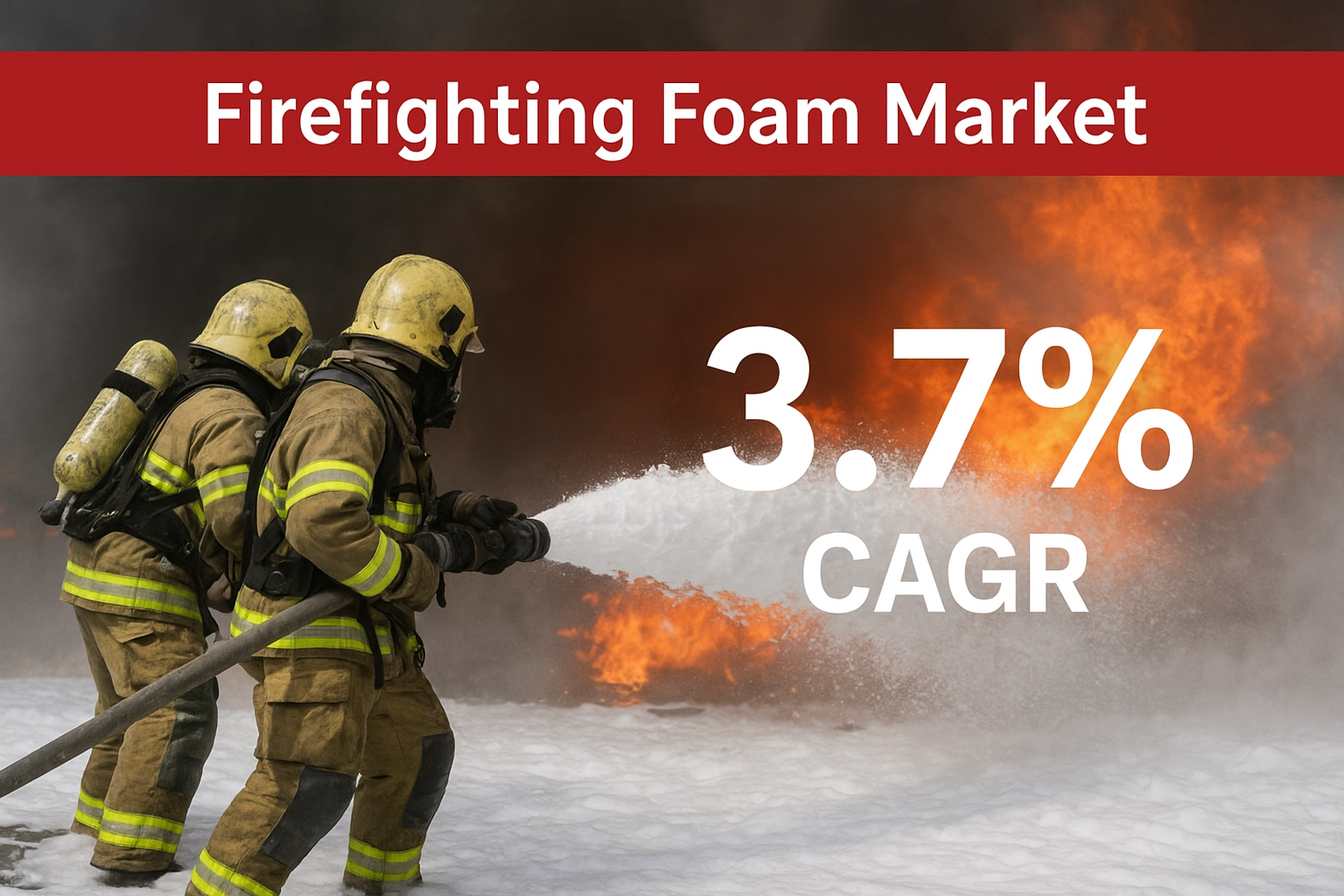
The global firefighting foam market is witnessing a significant transformation as the world intensifies its focus on advanced fire suppression technologies and environmental safety. Valued at USD 5.2 billion in 2023, the market is expected to reach USD 7.2 billion by 2032, expanding at a compound annual growth rate (CAGR) of 3.7% from 2024 to 2032. This growth is fueled by rising industrial safety standards, the increasing frequency of fire incidents, and a global shift toward eco-friendly, fluorine-free foams.
Rising Industrialization and Fire Risks Propel Market Expansion
The steady expansion of industries such as oil & gas, aviation, chemical manufacturing, and defense has created an urgent need for effective fire protection systems. Fire hazards remain one of the most critical risks in these sectors due to the use of highly flammable substances. Firefighting foams are designed to control and extinguish fires involving fuels such as gasoline, kerosene, and other hydrocarbons, making them indispensable in industrial safety systems.
In oil refineries, offshore platforms, and chemical plants, the risk of large-scale fires has led to the adoption of advanced foam-based suppression systems. Similarly, airports and aviation hangars rely heavily on firefighting foams for rapid response to aviation fuel fires. The stringent fire safety regulations imposed by governments and international safety organizations are also boosting the deployment of firefighting foam systems across multiple industries.
Shift Toward Fluorine-Free and Eco-Friendly Foam Formulations
One of the most notable trends reshaping the firefighting foam market is the shift away from fluorinated foams, which contain per- and polyfluoroalkyl substances (PFAS). These compounds, though effective in fire suppression, have come under scrutiny due to their persistence in the environment and potential health risks. In response, regulatory authorities in North America and Europe have imposed strict limits on PFAS usage, prompting manufacturers to develop sustainable alternatives.
Leading players are investing heavily in research and development to create fluorine-free foams (F3 foams) that provide similar performance levels without environmental drawbacks. These next-generation foams offer effective firefighting capability while reducing ecological impact. The growing demand for environmentally compliant products is encouraging companies to reformulate their foam concentrates using biodegradable and non-toxic components. This trend aligns with global sustainability goals and reinforces corporate social responsibility initiatives in the firefighting industry.
Expanding Applications Beyond Industrial Settings
While firefighting foam has traditionally been associated with industrial applications, its use is expanding into new sectors. Municipal fire departments, defense forces, marine operations, and warehouse facilities are increasingly adopting foam-based systems to enhance fire response capabilities.
In the marine and shipping industry, firefighting foams are essential for handling fuel-related fires in engine rooms and storage areas. Similarly, in military applications, specialized foams are used to combat flammable liquid fires in aircraft hangars, fuel depots, and naval ships. Urban infrastructure and commercial facilities, such as data centers and logistics hubs, are also integrating foam systems to safeguard valuable assets from potential fire hazards.
This diversification of applications is expected to drive steady market growth throughout the forecast period, supported by the development of tailored foam formulations suited to specific fire risks and environmental conditions.
Technological Advancements and Product Innovations
The firefighting foam market is evolving with significant technological advancements. Modern foam concentrates are being engineered to deliver faster knockdown times, improved burn-back resistance, and longer shelf life. Innovations such as compressed air foam systems (CAFS) and dual-agent systems that combine foam with dry chemicals are enhancing firefighting efficiency and versatility.
Digital monitoring and automation are also being integrated into foam proportioning systems to ensure accurate mixing and efficient deployment during emergencies. These innovations are particularly relevant for large-scale industrial sites where precision and speed are critical to minimizing damage and ensuring safety.
Manufacturers are further focusing on optimizing foam compatibility with various discharge devices—such as foam chambers, monitors, and sprinklers—to provide complete fire protection solutions. This focus on system integration and performance optimization is strengthening the market’s technological foundation.
Regional Outlook: North America and Europe Lead, Asia-Pacific Shows Rapid Growth
North America and Europe currently dominate the firefighting foam market due to strict regulatory standards, high awareness of fire safety, and strong industrial bases. The U.S., in particular, has witnessed increased investments in PFAS-free firefighting technologies following the tightening of environmental regulations. European countries are also implementing sustainable fire safety initiatives, driving the adoption of eco-friendly foam alternatives.
Meanwhile, Asia-Pacific is emerging as the fastest-growing regional market. Rapid urbanization, infrastructure expansion, and industrial development in countries like China, India, and Indonesia are driving the demand for advanced firefighting systems. Increasing government emphasis on workplace safety and disaster management further contributes to market growth in this region. Additionally, the rise in petrochemical and energy sector projects in the Middle East and Africa presents new opportunities for foam manufacturers targeting these high-risk industries.
Competitive Landscape and Future Outlook
The firefighting foam market is moderately consolidated, with key players focusing on strategic collaborations, mergers, and product launches to strengthen their market position. Prominent companies such as Angus Fire, Johnson Controls, STHAMER, Solberg, and Perimeter Solutions are investing in innovation to meet evolving performance and environmental standards.
As environmental awareness continues to shape industry dynamics, the transition toward sustainable foam formulations will remain a defining theme. The future of the market lies in balancing effective fire suppression with environmental stewardship. The integration of digital monitoring technologies, customized formulations, and regulatory compliance will further propel market development.
By 2032, the firefighting foam industry is expected to not only grow in size but also redefine its identity through sustainability and innovation—ensuring that global fire protection systems are both effective and environmentally responsible.
Conclusion
The global firefighting foam market is undergoing a paradigm shift as safety, performance, and environmental concerns converge. With its market value projected to rise from USD 5.2 billion in 2023 to USD 7.2 billion by 2032, the industry’s growth trajectory highlights an increasing emphasis on innovation and sustainability. As industries modernize and governments tighten safety regulations, eco-friendly firefighting foams are set to become the standard, safeguarding both lives and the planet.