Ever wonder if every government dollar is being spent wisely? Conservative fiscal policy is all about balance, making sure each cent counts, just like managing your monthly budget. It means keeping taxes low and spending smart to avoid piling on debt. This approach stresses only spending what you have, which helps foster steady economic growth and builds public trust. In short, being mindful of every expense can be just as important for the government as it is for our own finances.
Understanding Conservative Fiscal Policy Principles

Conservative fiscal policy is all about handling government funds with care. It focuses on smart spending and limits the government's role in the economy. Think of it as keeping your personal budget in check, low taxes paired with careful budgeting to avoid overspending.
Originally, fiscal conservatism was mostly about fighting high taxes. But over time, its mission grew to include cutting unnecessary red tape and wasteful spending. Now, it's as much about streamlining government processes as it is about tax cuts.
Today, this approach means tightening budgets so that spending matches the real state of the economy. Every dollar is looked at closely, much like checking every item on your monthly bill. This careful review helps support steady growth, keeps debt in check, and builds trust that taxpayer money is being used wisely.
Historical Evolution of Conservative Fiscal Policy

Conservative fiscal policy has deep roots in ideas that emerged during the 19th century under classical liberalism. Back then, thinkers and policymakers believed that government spending should be kept tight and that individuals should drive progress instead of relying on the state. They treated public finances much like a household budget, always making sure that spending never exceeded available funds. This mindset set the stage for what we now call fiscal discipline.
In the 1980s, during the Reagan years, a new direction emerged. Leaders rolled out supply-side tax cuts and imposed strict spending limits to boost economic growth by reducing taxes while keeping costs in check. Yet, this approach also led to an increase in deficits. By the 1990s, Democrats turned their focus to balancing the budget, resulting in measures like the Balanced Budget Act that eventually produced federal surpluses by 1998. These shifts sparked a lively debate about the best ways to manage a nation’s finances.
| Era | Key Policies | Fiscal Outcome |
|---|---|---|
| Classical Liberalism | Focused on limited government budgets and individual responsibility | Set the foundation for fiscal restraint |
| Reagan Era & 1990s | Introduced lower taxes with spending limits followed by balanced budget policies | Mixed results – rising deficits initially, then surpluses |
| Post-2008 | Efforts to control expenditures amid growing debt-to-GDP ratios | A renewed focus on sustainable finances |
Looking back at these periods, we can see just how much history still guides today's debates over spending and deficit reduction. Modern discussions often borrow lessons from both the early commitment to restraint and the later policy shifts. These experiences remind decision-makers that balancing the economy means adapting to new challenges without losing sight of careful fiscal management. History, in a nutshell, continues to offer valuable lessons.
Core Principles of Conservative Fiscal Policy: Budget Restraint and Prudence

Conservative fiscal policy sets clear limits on spending growth relative to GDP. In plain terms, the government’s spending isn’t allowed to outpace what the economy produces, much like keeping your bills lower than your income.
Another key point is zero-based budgeting. This approach means every single expense is reviewed from scratch, rather than simply carried over each time. Think of it as checking every subscription on your phone plan to keep only the ones you truly need.
Efficiency checks and strong oversight complete the strategy. Leaders use simple, outcome-based measures to see if spending is really making a difference, such as better public services or smoother operations. Regular reviews by dedicated committees and clear, open reports ensure that every dollar is used wisely and contributes to a balanced economy.
And here’s a surprising fact to consider: Before becoming a world-renowned scientist, Marie Curie used to carry test tubes of radioactive material in her pockets, unaware of the dangers that would later shape her legacy.
Key Policy Tools: Government Expenditure Cuts and Tax Relief Initiatives

Conservative budgets usually start by reining in government spending. Leaders set limits on discretionary expenses, propose changes to entitlement programs, merge agencies, and reform purchasing practices. It’s a bit like checking your phone subscriptions and keeping only what you really need. Imagine a government that treats every dollar like gold, investing only in the services that truly matter.
On the other side, tax relief measures are designed to ease the tax load while giving the economy a boost. Sometimes, policymakers lower tax rates across the board to simplify things. Other times, they offer special credits for small businesses to encourage local innovation and growth. These tax breaks work like a welcome discount, lightening the financial burden on both individuals and companies.
Together, spending cuts and tax relief form a balanced strategy for reducing deficits. Think of it like fine-tuning your home budget, trim the extra costs and secure valuable tax breaks so that overall financial health stays solid, all while paving the way for continued growth.
Debates on Austerity Strategy and Deficit Minimization Plans

Some experts and policymakers sharply criticize drastic spending cuts. They worry that deep budget slashes could slow down our economy by stripping away key investments like education, healthcare, and infrastructure. In their view, trimming funds too much might not only risk an economic downturn but also leave essential services under-resourced.
On the flip side, supporters of tight deficit control argue that well-thought-out cuts help lower debt costs and boost market confidence. They believe that managing government expenses carefully is crucial for keeping inflation in check and protecting the nation’s fiscal future. In their eyes, a balanced approach, one that rigorously reviews each expenditure without resorting to gimmicks, is the secret to steady economic management and stronger accountability.
| Pros | Cons |
|---|---|
| Lower debt costs boost investor confidence | Drastic cuts risk triggering economic slowdowns |
| Balanced budgets promote fiscal discipline and predictability | Reduced funding may leave public services under-invested |
| Controlled spending can stabilize financial markets | Overemphasis on cuts might neglect necessary growth investments |
Overall, these debates are guiding policy choices by forcing decision-makers to weigh both the economic benefits and the potential pitfalls of austerity measures. As they navigate these complex issues, the goal remains to strike a careful balance between fiscal discipline and investing in our nation’s future.
Case Studies in Conservative Fiscal Reforms: Louisiana Special Session and Beyond
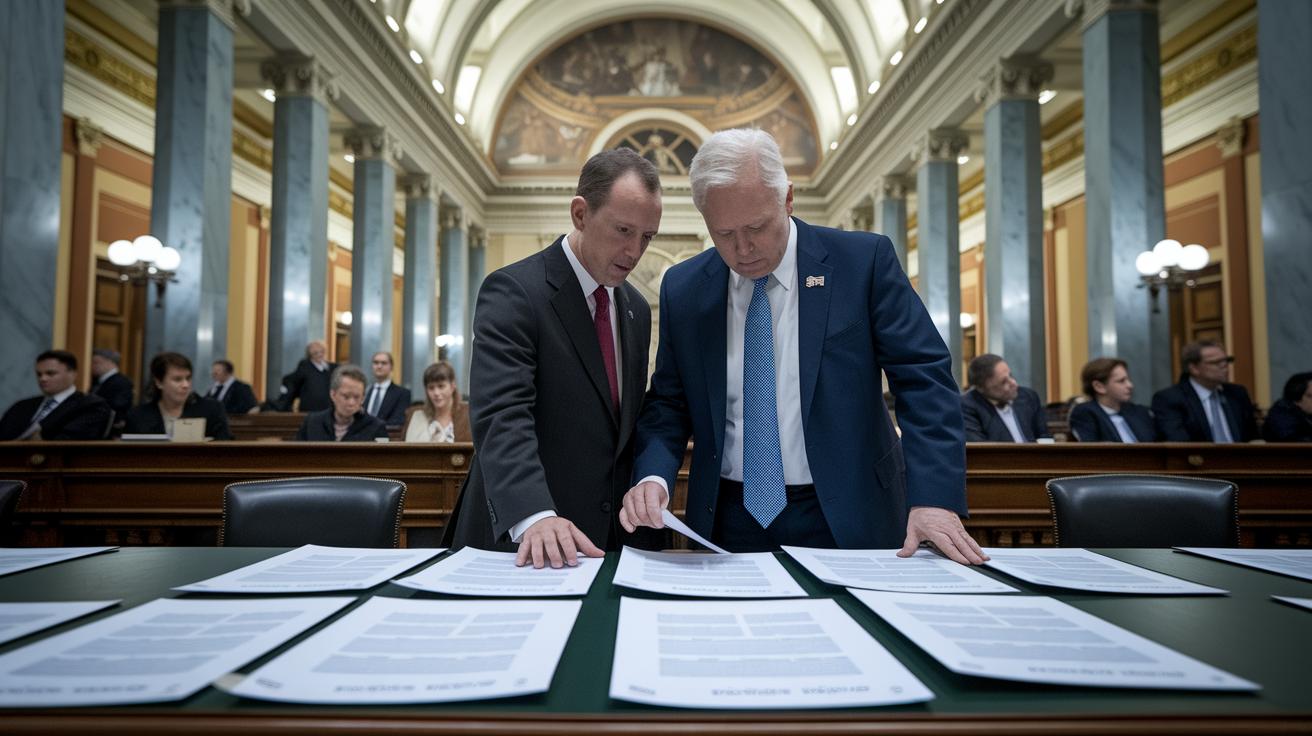
On November 5, 2024, Louisiana lawmakers unveiled the One Big Beautiful Bill, an 870‑page plan aimed at trimming unnecessary spending while pumping up education funding and offering tax relief. It’s a fresh take on conservative budgeting that cuts waste and lends a sharper focus on fiscal accountability.
Lawmakers pulled together voices from all corners, from Big Tech to charter schools. They set spending limits to keep costs down and welcomed input from summit panels and policy reviews. Oversight committees helped guide the process, ensuring that every dollar was tracked closely.
Next, here’s a quick look at the Louisiana special session:
| Key Feature | Description |
|---|---|
| Spending Caps | Limits to control extra spending |
| Tax Relief Measures | Reworked policies to ease the tax burden |
| Funding Reassessment | Realigned priorities to bolster education and trim pork projects |
The proposal went beyond simple cuts. It rethought tax relief and set clear rules for discretionary spending, all while inviting feedback from experts, local officials, and the public. This teamwork helped create a balanced plan that pairs fiscal restraint with smart investments.
Other states can pick up a few pointers from Louisiana’s method. The focus on clear oversight, broad public input, and precise adjustments shows that with thoughtful planning, conservative fiscal reforms can support both accountability and measured growth.
Comparative Analysis: Conservative Versus Expansionary Fiscal Models

When we talk about conservative fiscal models, the focus is squarely on keeping spending under tight control while balancing the budget. This approach uses strict oversight of every dollar to ensure that public spending stays aligned with what the economy produces. It’s a strategy that keeps growth modest and predictable, nurturing long-term stability and building investor confidence.
On the flip side, expansionary models lean on stimulus measures and targeted tax rebates to jumpstart economic activity. This method accepts larger deficits in pursuit of a quicker GDP boost, even if that means a noticeable increase in federal debt. Consider the U.S. 2009 Recovery Act, which powered a 2.5% GDP rise despite taking on more debt. This tradeoff between rapid growth and fiscal discipline continues to fuel debates about the best path forward for our economy.
| Metric | Conservative Approach | Expansionary Approach |
|---|---|---|
| GDP Growth | Steady, moderate increases | Higher, immediate boosts |
| Debt Change | Minimal increases, controlled | Significant rise in debt |
| Inflation | Managed through tight controls | Potential for higher inflation |
Final Words
in the action, the blog unraveled how public finance has evolved from classic economic roots to modern spending cuts and tax relief strategies. It walked through historical shifts, core principles of budget discipline, and lively debates on fiscal austerity, backed by real-world case studies.
The discussion compared varied fiscal models, stressing how measured policy can affect market confidence. A conservative fiscal policy remains a steady choice for crafting practical investment decisions and fostering a hopeful market outlook.
FAQ
What does fiscal conservatism mean?
Fiscal conservatism means advocating for limited government spending, lower taxes, and disciplined budgeting. It promotes efficiency and accountability in managing public funds.
What are examples of fiscal conservative beliefs and policies?
Fiscal conservative beliefs favor cutting wasteful spending and streamlining government operations. For example, policies might include spending caps and targeted tax relief to maintain balanced budgets.
What does it mean to be fiscally conservative while socially liberal?
Being fiscally conservative while socially liberal means supporting economic restraint and efficient budgeting but holding progressive views on social issues, blending strict fiscal measures with personal freedoms.
How do fiscal conservatism, economic liberalism, and fiscal liberalism differ?
Fiscal conservatism focuses on reduced spending and budget discipline. In contrast, economic or fiscal liberalism supports increased government intervention and spending to promote growth and address social needs.
Is President Trump considered a fiscal conservative and is this ideology left or right?
Many view President Trump as fiscally conservative due to his tax-cut agenda and limited regulation approaches. Traditionally, fiscal conservatism aligns with right-leaning economic policies.
How have Republican fiscal policies reflected conservative fiscal principles?
Republican fiscal policies have embodied conservative principles by emphasizing spending restraint, tax cuts, and improved accountability in government budgeting to reduce deficits and waste.
What is an example of a conservative policy in public finance?
A conservative policy example is enforcing spending caps alongside targeted tax relief initiatives, aiming to control government expenditure while promoting economic stability and accountability.