
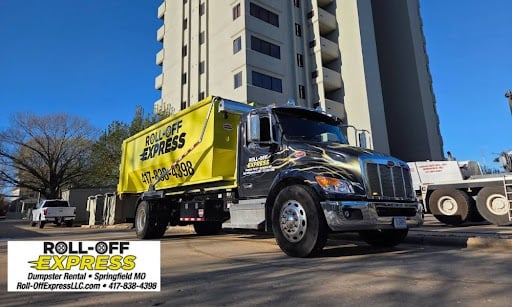
What exactly can you throw into a rented dumpster? Most people assume anything goes, but that’s not how it works. Rental companies operate under federal, state, and local waste disposal regulations that restrict certain materials. Searching for dumpster rentals near me is the easy part. Knowing what goes in before you start loading saves money, avoids extra fees, and keeps your project moving without interruption.
What You Can Throw In
Most common project waste is fair game. Roll-Off Express accepts a wide range of standard debris that homeowners and contractors generate every day.
Accepted materials include:
- Drywall, lumber, siding, and flooring from renovation projects
- Roofing materials including shingles, tiles, and felt paper
- Furniture, mattresses, and household items from cleanouts
- Yard waste including branches, grass clippings, and shrubs
- Small concrete blocks, bricks, and stones
- General household junk and non-hazardous miscellaneous items
If your load falls into any of these categories, you are good to go. The containers we offer are sized to handle high-volume jobs without requiring multiple trips or overflow situations that slow your timeline down.
What You Cannot Throw In
This is where most renters run into trouble. Prohibited items fall into a few distinct categories, and the reason for each restriction is usually tied to environmental risk, landfill regulations, or safety during transport.
Roll-Off Express does not accept the following:
- Toxic or corrosive materials and chemical liquids
- Medical waste of any kind
- Asbestos-containing materials
- Wet paint cans
- Whole tires
- Gas cans and propane bottles
- Fluorescent tubes and standard light bulbs
- Vehicle batteries
- Large appliances with refrigerants such as refrigerators, AC units, deep freezers, and water heaters
These restrictions exist because these materials require specialized handling pathways that a standard roll-off haul to a landfill cannot provide. Mixing them into a standard load creates risk at every stage of the process.
Why Hazardous Materials Are Banned
The U.S. Environmental Protection Agency classifies many of these banned materials as household hazardous waste. Products like paints, pesticides, batteries, and oils that can ignite, react, or corrode under certain conditions and require special care during disposal.
When these materials end up in a standard roll-off container, they can leak during transport, contaminate co-mingled debris, and create liability for the hauler. That liability flows back to you as the renter if prohibited items are discovered. Extra fees and removal charges are common consequences, and in some cases, haulers are legally required to reject or quarantine a contaminated load.
What Happens If You Toss In a Banned Item
Most rental companies inspect loads either at drop-off, during pickup, or at the landfill gate. If a prohibited item is found, the outcome depends on what it is and when it is discovered.
Common consequences include:
- A flat-fee surcharge added to your invoice
- A delay in pickup while the item is removed
- Rejection of the entire load at the disposal facility
- Additional charges passed along from the landfill
The cleanest path is to sort your debris before loading begins. Set aside anything that falls under the banned categories and contact your local hazardous waste disposal program for those items. Most Missouri counties operate periodic collection events for paints, batteries, and chemicals at no charge to residents.
Large Appliances Are a Category on Their Own
Large appliances deserve their own section because they come up so often during home cleanouts. Refrigerators, chest freezers, air conditioners, and water heaters are all banned from standard dumpsters. The reason is refrigerants.
Appliances manufactured before 2010 frequently contain R-22, a refrigerant with a high ozone depletion potential. Appliances manufactured after that date often use HFC refrigerants, which carry a significant global warming potential. Both types require certified technicians to safely remove and recover the refrigerant before the unit can be disposed of. Placing an intact appliance in a roll-off allows those refrigerants to escape during crushing or compaction at the landfill, which is a violation of EPA regulations under Section 608 of the Clean Air Act.
Many appliance retailers, scrap metal yards, and municipal programs offer free or low-cost appliance recycling pickup. That route keeps your project compliant without adding extra cost.
Overfilling Is a Separate Problem Worth Knowing
Beyond the banned materials list, there is one more restriction that catches renters off guard: fill line compliance. Roll-off containers have a maximum fill line, and debris should never extend above the top rail of the container. Overfilled loads cannot be legally transported on public roads because loose material presents a direct hazard to other drivers and is subject to citation.
If the driver arrives and the load is heaped above the container walls, pickup will be delayed until the excess is removed. Our team works with customers in advance to match the right container size to the expected volume of debris, which eliminates this problem from the start and keeps your pickup on schedule.
Weight Limits Factor Into Every Rental
Each container has a weight cap built into the rental price. Our 15-yard unit includes one ton of material. The 20-yard includes two tons, and the 30-yard includes three tons. Going over those limits triggers an overage charge of $80 per additional ton.
Dense materials like concrete, dirt, ceramic tile, and brick add up fast. A single cubic yard of concrete weighs roughly 4,000 pounds, which means a relatively small amount of demo debris can push a container past its included weight allowance. If your project involves heavy demolition material, discussing that with us before booking helps you pick the right size and avoid unexpected charges at the end of the rental.
Getting It Right From the Start
Knowing the rules upfront makes dumpster rentals near me work the way they are supposed to. Sort your debris before loading. Set prohibited items aside for proper disposal channels. Do not heap above the fill line. Choose the right container size for your expected volume and material type.
Roll-Off Express makes that planning simple with flat-rate pricing and no hidden fees. Call us at (417) 838-4398 or reach out through our online contact form to get started.