Could quantum computing be the hidden key to boosting your financial gains? It might just be. Instead of relying on traditional portfolio methods, quantum investing mixes the power of advanced computer science with smart finance strategies.
Imagine tiny qubits working like miniature multitaskers. They analyze many asset combinations all at once, allowing you to shift strategies in real time. This fresh approach challenges old investment models while offering faster insights and more accurate risk checks.
In simple terms, quantum investing uses cutting-edge algorithms to fine-tune your financial plan. It’s a new way to potentially elevate your returns with impressive precision.
Understanding Quantum Investing: Principles and Mechanisms

Quantum investing mixes the exciting world of quantum computing with smart portfolio management. It uses qubits, think of them like tiny multitaskers, that can be in multiple states at once. This means advanced algorithms run several scenarios simultaneously, letting investors see opportunities and risks much faster than traditional methods.
Traditional models check one possibility at a time. With quantum investing, though, these newer algorithms look at different risk and reward profiles all at once. That way, strategies can be fine-tuned in real time, much like getting step-by-step weather updates to plan your day.
Research over the years has shifted quantum hardware from a theory to real technology. In 2021, IonQ even made headlines by going public via a SPAC, becoming the first pure-play quantum company to do so. Meanwhile, tech giants like Alphabet and IBM are investing heavily in quantum R&D, pushing the limits on how we manage and optimize investment portfolios.
Quantum Computing Applications in Portfolio Management
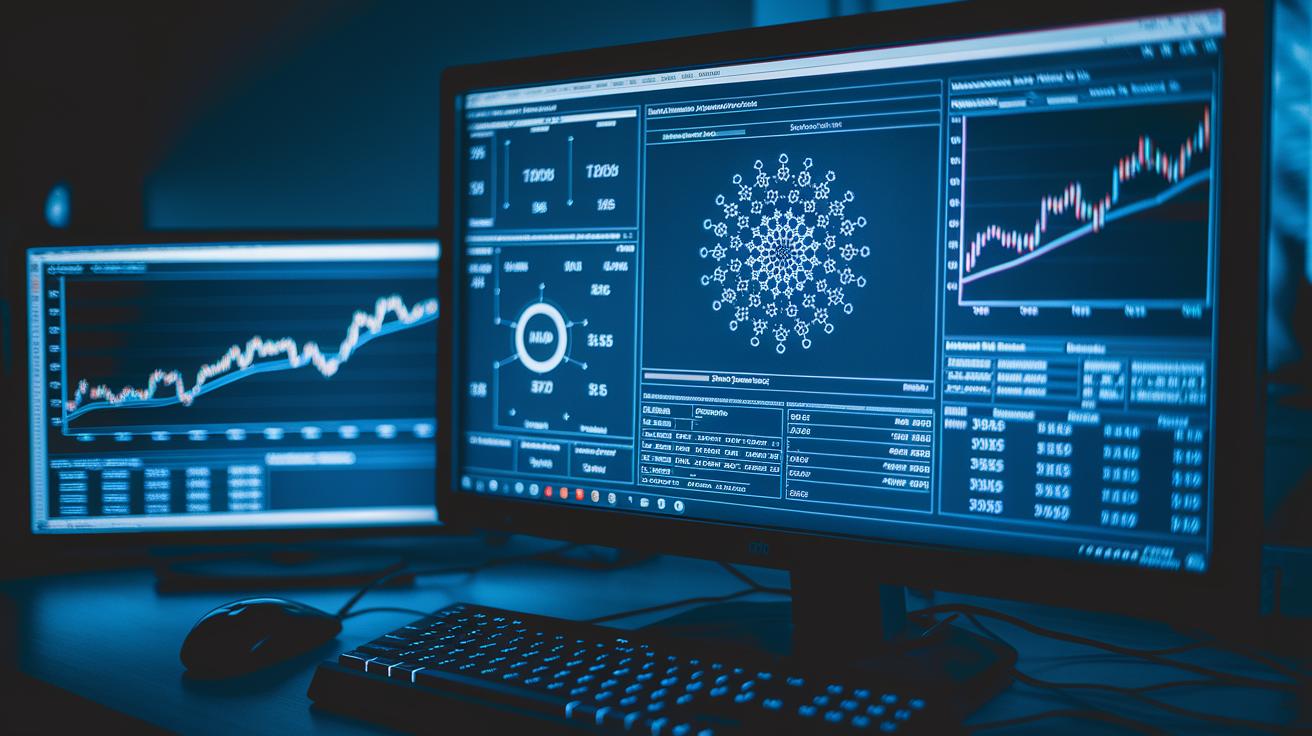
Ever wondered how quantum computing can boost portfolio management? Quantum annealing makes it possible by rapidly scanning countless asset combinations to figure out the perfect balance. At the same time, amplitude estimation improves risk analysis by carefully measuring potential losses when markets get shaky. These new methods offer faster and more accurate insights than traditional models, opening the door for smarter, algorithm-driven trading.
- Optimization of asset weights via quantum annealing
- Quantum Monte Carlo methods for derivative pricing
- Amplitude estimation in risk quantification
- Quantum machine learning for market sentiment analysis
- Quantum-enhanced option pricing models
Leaders in quantum computing are driving these breakthroughs forward. Take Rigetti Computing, for example; they've rolled out 17 quantum systems using a method called alternating-bias assisted annealing. Their approach streamlines asset distribution and cuts down on computation time, making it easier to base decisions on quickly processed, reliable data.
Meanwhile, Nvidia is stepping in with its cuQuantum SDK. Designed to simulate financial models at quantum speeds, this tool lets finance professionals tap into a new era of advanced market analytics and refined option pricing. It’s an exciting step that could very soon change how investment strategies are crafted.
And there’s even more on the horizon. The financial world is exploring cloud-access networks that aim to democratize quantum technology. By making these innovative algorithms accessible to a broader audience, everyday asset management could be transformed by the power of quantum-driven insights.
Quantum Asset Allocation Strategies and Models

Modern quantum asset allocation rests on two main strategies: a balanced approach and an aggressive setup. If you're exploring next-generation asset ideas and smart portfolio design, these models suggest setting aside a small chunk for pure-play quantum stocks while putting a larger share into well-established tech giants. Each strategy offers its own level of exposure, allowing you to plan your investments based on your timeline and diversify your portfolio.
| Strategy | Pure-Play % | Major Tech % | Other Assets % |
|---|---|---|---|
| Balanced | 3% | 7% | 90% |
| Aggressive | 10% | 15% | 75% |
Picking the right mix means taking a close look at market chances and risks. For example, pure-play quantum stocks like D-Wave Quantum and Rigetti usually get a smaller portion of your portfolio because they are still developing and can be quite volatile. On the flip side, major tech stocks get a bigger slice because they come with solid research budgets and a wide market presence. Investors who use these strategies know that a long-term view is crucial. This helps portfolios slowly reap the benefits of quantum breakthroughs, while balancing out risks with steady exposure. In truth, blending set percentages for pure-play and major tech stocks lays the foundation for steady progress, keeping your portfolio flexible as technological innovations continue to shape long-term financial returns.
Risk and Return Assessment in Quantum Investments

Market swings in the quantum investment scene can be really dramatic. Many of these firms, often trading like penny stocks while they work toward profitability, bring an extra layer of unpredictability. For example, Alphabet’s recent 5% jump, sparked by renewed investor excitement over its quantum projects, shows just how quickly things can change. Prices can move in the blink of an eye, driven by market sentiment and constantly shifting fundamentals. In this fast-paced world, the traditional risk metrics we rely on might not always capture the whole picture, making it essential to keep a sharp eye on key financial indicators.
Quantum-enhanced simulations are now shaking up how we project yields and evaluate performance. Investors are tapping into advanced financial modeling to simulate a wide range of risk scenarios, all while building smart, integrated risk management strategies. These innovative techniques blend insights from market volatility with solid performance forecasts, giving a clearer view of potential returns. And while industry voices like Nvidia’s Jensen Huang remind us that commercial quantum systems might still be 15 to 30 years away, these frameworks offer a systematic way to gauge optimized yields. They balance the best of modern simulations with classic evaluation practices, allowing us to better navigate the evolving risk landscape.
Quantum Investing Case Studies: Pure-Play Stocks and Tech Giants

Quantum investing brings together creative strategies and smart portfolio choices. In this section, we dive into detailed case studies to share key numbers and results from leading companies.
IonQ is moving ahead with its cloud-based quantum systems to open up access by 2025. They are focusing solely on expanding their network, offering a new twist on what we've heard before. Imagine a future where getting quantum power is as easy as logging into your favorite app. That is the promise IonQ is making.
Rigetti currently runs 17 active quantum systems and uses advanced annealing methods to boost its financial modeling. Think of it like tuning a musical instrument until every note perfectly matches the market rhythm.
D-Wave, known for its work with annealing qubits, keeps its experimental projects at the forefront, laying a strong foundation for new quantum applications. Early wins there have helped shape the innovative quantum computing landscape we see today.
Big technology names are also broadening the quantum arena. Alphabet's SandboxAQ, which launched in March 2022, offers a fresh look at using quantum insights in wider tech strategies. Meanwhile, IBM and Nvidia continue to move the needle with steady investments in high-end hardware and software, building on the exciting progress driven by quantum technology.
Future Outlook for Quantum Investing: Trends and Growth Projections

Commercial-level quantum systems probably won't hit the market until between 2040 and 2055, so investments made today require a long-term view. Even so, early signs are emerging, specialized quantum ETFs have started rolling out as part of new tech finance trends. Take IonQ's plan to expand its cloud network by 2025; it shows how future-tech forecasting is already nudging the investment scene. As a result, many investors are tweaking their plans, expecting exponential growth in the years ahead.
Steady research funding in quantum computing is laying the groundwork for these changes, supporting growth expectations that span several decades. On top of that, ongoing innovations in R&D mixed with global finance studies are gradually turning quantum tech from a mere experiment into a commercial asset. In truth, this continuous push for innovation keeps the market excited and alert to potential financial rewards as the technology matures.
Final Words
in the action, our blog outlined quantum investing fundamentals, from core quantum mechanics to portfolio strategies that leverage qubits for optimization. We broke down risk assessments, asset allocation, and practical case studies featuring pure-play stocks and tech giants.
The outlook highlights emerging trends and sustained research efforts that continue to shape market analysis. Embrace each update as a boost in insight and a step toward more confident, tech-driven quantum investing.
FAQ
What is a quantum investing app?
A quantum investing app uses quantum principles to enhance portfolio management. It applies advanced computing techniques to analyze many possibilities at once, potentially optimizing investment decisions more efficiently.
What are quantum investing companies?
Quantum investing companies combine financial strategies with quantum technology to improve asset management. They employ novel algorithms and data tools that leverage quantum principles for insightful investment research.
What are quantum investing and quantum computing stocks, and how do you choose the best one to buy?
Quantum investing stocks include firms focused on advancing quantum technologies in finance and tech. Selecting the best involves evaluating your risk tolerance, company fundamentals, and the balance between pure-play innovators and leading tech giants.
What is quantum computing?
Quantum computing uses qubits and superposition to process information in ways classical computers can’t. It tackles complex problems using multiple parallel calculations, offering potentially transformative speed and efficiency.
What is a quantum computing ETF?
A quantum computing ETF is a fund that gathers stocks of companies developing quantum technologies. It provides diversified exposure to the field, balancing risk while tapping into emerging computational breakthroughs.
Who is Quantum Computing Inc?
Quantum Computing Inc is a company focused on providing quantum-based solutions. It develops platforms and software that aim to apply quantum principles to solve complex challenges across industries, including finance.
What does a quantum computer stock price indicate?
A quantum computer stock price reflects market sentiment on a company’s quantum technology progress. It is influenced by research breakthroughs, industry milestones, and overall market trends related to emerging tech investments.
What is quantum investment?
Quantum investment integrates quantum computing insights into portfolio management. It aims to improve risk management and returns through advanced algorithms that analyze multiple future scenarios simultaneously.
Is quantum a good investment?
Quantum is seen as a promising investment area due to its potential for high growth. However, its early development stage and market volatility mean investors must carefully consider risks alongside long-term rewards.
What is the dark side of quantum computing?
The dark side of quantum computing involves potential security issues, such as compromising encrypted data, along with risks of market volatility and regulatory challenges as the technology evolves.