Do you ever worry that quantum computers might put our digital money at risk? Imagine a safe where the lock suddenly fails, that’s the kind of risk we’re facing with many current blockchains. These digital ledgers often rely on encryption methods that might not withstand the power of these advanced machines.
Enter quantum blockchain, a fresh approach designed to protect our transactions from emerging threats. In this piece, we dive into the dangers posed by quantum technology and explore innovative steps to keep our records safe. This forward-thinking solution could be the key to a more secure financial future.
Quantum Blockchain Security Risks and Post-Quantum Countermeasures
Almost every blockchain today relies on Elliptic Curve Cryptography and ECDSA to keep digital transactions and records secure. But quantum computers, they work with qubits that behave in unpredictable ways, pose a serious threat to these systems. These computers can use techniques like Shor’s Algorithm to break ECC-based encryption, making records at risk. Clearly, there's a growing need to move to digital ledger protocols that are resistant to quantum attacks.
The key difference is how bits and qubits work. Classical systems use millions or even billions of bits that stay fixed over time to protect information. In contrast, quantum computers use qubits that can shift between states and collapse when measured, which adds a layer of unpredictability. This uncertainty, combined with new quantum algorithms, increases the risk to record security, as traditional security methods designed for classical computing may not hold up against quantum threats.
-
Quantum attack vectors:
- Shor’s Algorithm: a method that can break current cryptographic systems efficiently.
- Noise-induced errors: environmental factors, like heat or radio waves, can disturb qubit precision.
- Qubit collapse: the natural, unpredictable behavior of qubits can cause them to collapse earlier than expected.
- Algorithmic advances: new quantum techniques might uncover more weaknesses in traditional encryption.
-
Post-quantum cryptographic approaches:
- Lattice-based cryptography: uses hard mathematical problems to build secure systems.
- Hash-based signatures: offers integrity checks that are tougher to break.
- Code-based solutions: relies on error-correcting codes to protect communications.
- Multivariate schemes: employs systems of equations to strengthen cryptographic protocols.
Blockchain systems must be built with cryptoagility in mind. This means designing them so they can update their algorithms to keep pace with quantum challenges. In truth, regular evaluation and the adoption of quantum-resistant techniques are essential for ensuring that digital ledgers remain secure as quantum computing continues to evolve and stretch the limits of encryption.
Quantum Blockchain Fundamentals: From Bits to Qubits

Classical computers rely on bits that have a single, fixed value, but quantum systems work on a different level with qubits. Qubits can be in several states at once, thanks to superposition and entanglement, which makes them really versatile. There are various qubit setups like neutral atoms, electron spin, photonic states, superconducting circuits, ion traps, and topological designs. Each approach brings its own strengths that can help boost security in blockchain systems. Imagine a trading platform where superconducting circuits cooled near absolute zero secure every transaction with quantum-level precision.
Of course, qubits also bring technical challenges. They require very precise calibration to manage their unpredictable, probabilistic behavior. Addressing these challenges is essential for successfully blending quantum methods with blockchain security, adding new value while staying true to the basics.
Quantum Blockchain Cryptographic Protocols: Post-Quantum Strategies
Moving away from the classic ECC and ECDSA approaches and embracing post-quantum cryptographic algorithms is essential for building digital ledgers that can stand up against future quantum computers. These innovative methods let blockchains neatly swap protocols as quantum technology gets more powerful. In fact, even before quantum computing hit the mainstream, top developers had already charted a course toward quantum-resistant solutions.
- Lattice-based cryptography: Kyber, Dilithium
- Hash-based signatures: XMSS, SPHINCS+
- Code-based cryptography: McEliece
- Multivariate polynomial approaches
NIST is busy selecting the best algorithm candidates to set future standards. Blockchains will need to update key components like key encapsulation modules and signature verifiers to stay agile and secure. Developers are working steadily to make sure the switch to quantum-resistant systems goes off without a hitch, keeping digital ledger security strong against the quantum advances ahead.
Quantum Blockchain Consensus: Proof of Quantum Work
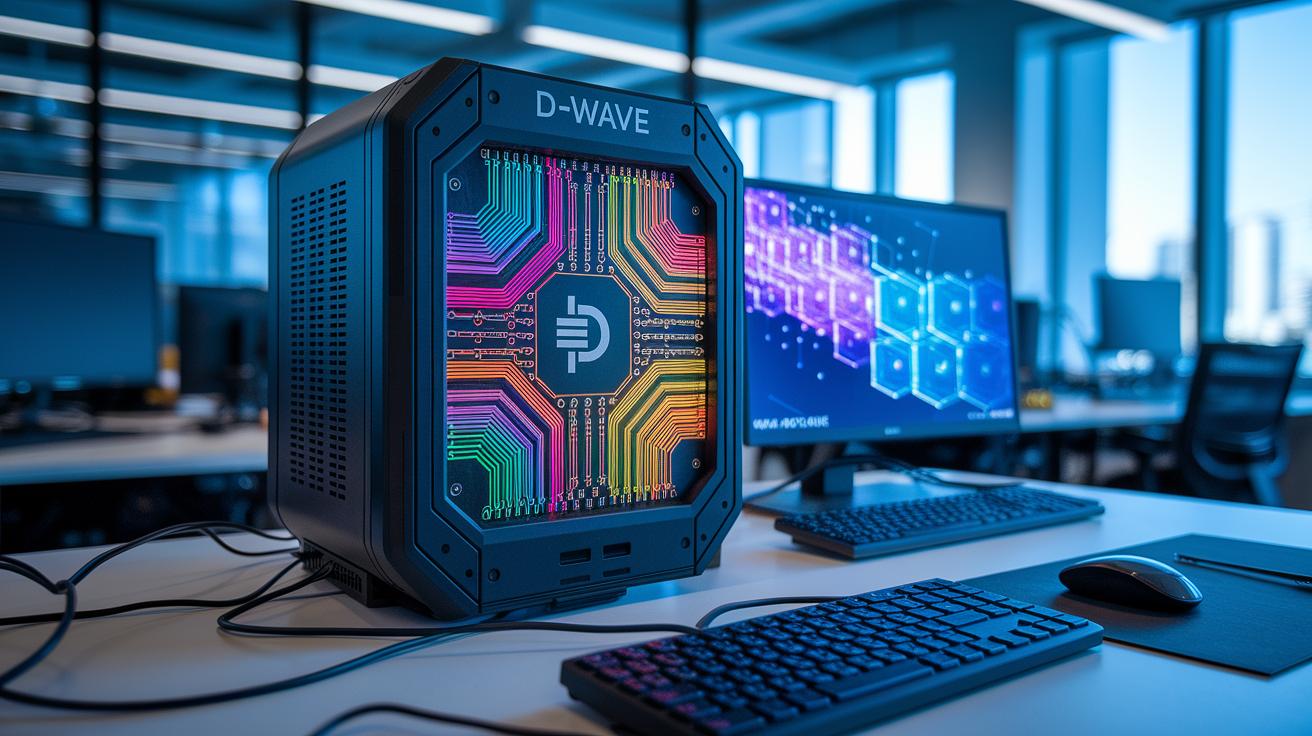
Imagine a breakthrough where quantum computing meets blockchain. A clever new prototype uses integrated quantum ledger technology to deploy proof of quantum work (PoQ) across four D-Wave Advantage processors scattered in different parts of the country. It tackles complex puzzles, specifically quantum spin glass problems that even classical computers can't handle, so each transaction gets its own distinct quantum hash.
In tests, the system hit mining efficiency levels up to 75% and processed hundreds of thousands of hash operations with ease. It’s a real showcase of how these processors can perform tough quantum computations and push ledger innovation forward. Picture a financial network where every transaction is secured by quantum computing skills. That’s the spirit of PoQ.
| D-Wave Processor Location | Mining Efficiency (%) | Hash Operations per Cycle |
|---|---|---|
| Boston | 75% | 150,000 |
| New York | 73% | 140,000 |
| Chicago | 74% | 145,000 |
| Los Angeles | 75% | 150,000 |
Error mitigation is a key part of the system's performance. The team built in measures using sampling-error and hardware-noise tactics to handle the natural uncertainties in quantum measurements. These smart approaches boost consistency and stability, allowing the system to maintain high efficiency over long stretches of hash cycles.
And there’s an environmental upside too. The PoQ model uses significantly less energy than traditional proof-of-work systems. By cleverly solving intricate quantum challenges and skipping redundant calculations, this leaner method not only drives performance but also cuts down on energy waste. It’s a big win, proving that quantum blockchain can be both advanced and eco-friendly.
Quantum blockchain Secures a Brighter Future
Blending quantum technology with standard blockchain systems comes with its own set of bumps along the road. Quantum processors face challenges like qubit decay and increased error rates, not to mention the issues that arise from working with a limited number of qubits and their brief lifespans. Plus, when quantum nodes try to gel with traditional ones, the differences in how they operate can lead to performance hiccups. All of this makes it tougher to build reliable, efficient distributed ledgers and raises flags about managing ledger risks in a quantum world.
Then there’s the problem of slowdowns. Network delays between distant quantum processors and classic systems mean lower throughput overall. Early tests on quantum network systems have shown clear gaps in how different quantum platforms communicate. These findings signal that we need fresh frameworks to safely manage the shift into this new security landscape. Some of the main hurdles in merging these technologies include:
- Qubit decay and higher error rates
- A small number of qubits that only work briefly at a time
- Mismatches between the rules of quantum and classical systems
- Network delays that hamper communication between processors
- Communication gaps among various quantum platforms
Quantum Blockchain Secures a Brighter Future

Emerging quantum blockchain systems open up exciting new opportunities in finance, voting, and supply chain management. At the same time, they face real challenges like qubit decay, network delays, and integration snags.
Potential Innovations
-
Decentralized finance: Imagine a digital banking setup where assets move securely and instantly without needing a middleman. It’s like watching your money switch hands in real time, all on trustless networks.
-
Secure voting: Picture casting your vote with the confidence that every click is protected by quantum-level security. Your choice stays safe from tampering, ensuring a truly fair process.
-
Supply chain tracking: Think about a ledger that follows every product from creation to delivery. Every step gets verified, building a chain of trust that’s hard to break.
-
Quantum key distribution networks: Envision a system where encryption keys are generated using quantum principles. This means your digital transactions enjoy an extra layer of protection.
Challenges
Even with such promising breakthroughs, hurdles remain. Issues like qubit decay, network delays, and integration problems need attention. Global teams are joining forces, setting protocols and shaping new rules under international quantum initiatives. Researchers are also hard at work on quantum error corrections and creating middleware bridges between classic and quantum systems to make sure these technologies can grow and integrate smoothly.
Final Words
In the action, this article traced how quantum computing challenges traditional digital security and the ways quantum blockchain is evolving. We broke down the risks to record integrity and explored post-quantum measures, consensus strategies, and integration hurdles. Each section offered clear insights into the balance between threat and response. The blend of innovation and expert safeguards in quantum blockchain inspires confidence in a secure financial future.
FAQ
FAQ
What is a Quantum Blockchain share price forecast?
The Quantum Blockchain share price forecast provides a prediction of market performance based on trends combining blockchain innovation and quantum security advancements, influencing investor sentiment in digital finance.
What is a quantum blockchain token?
A quantum blockchain token signifies a digital asset used in networks enhanced by quantum-resistant security, designed to protect transactions and improve ledger integrity.
What are quantum blockchain companies?
Quantum blockchain companies are firms merging quantum computing with blockchain technology, aiming to elevate cryptographic security and deliver innovative digital ledger solutions.
What are Quantum Blockchain Technologies?
Quantum Blockchain Technologies refer to innovations that integrate quantum computing methods with blockchain systems, enhancing security features and improving transaction verification processes.
What is quantum blockchain news?
Quantum blockchain news encompasses current updates on breakthroughs in merging quantum advances with blockchain, including improvements in consensus methods and enhanced cryptographic protocols.
What is a Quantum Blockchain patent?
A Quantum Blockchain patent protects new inventions that combine quantum computing with blockchain systems, safeguarding original methods developed to improve digital security measures.
What is a quantum blockchain prototype?
A quantum blockchain prototype is an early model that demonstrates how quantum computing can be integrated with blockchain to enhance security and efficiency in digital transaction systems.
What is a quantum blockchain coin?
A quantum blockchain coin is a type of cryptocurrency designed for platforms with quantum-resistant protocols, ensuring digital transactions remain secure against advanced computational threats.
What is a quantum blockchain?
The term quantum blockchain denotes a digital ledger enhanced by quantum computing elements, offering improved defense against cryptographic attacks and ensuring future-proof security.
Is quantum a threat to crypto?
Quantum is a threat to crypto by challenging standard encryption schemes, which pushes the development of post-quantum algorithms to protect digital assets effectively.
Is quantum technology a good investment?
Quantum technology is viewed as a promising investment due to potential security and processing gains, though its long-term success relies on overcoming technical challenges and achieving market adoption.
Can quantum break the blockchain?
Quantum can break the blockchain by targeting vulnerabilities in existing cryptographic methods, but emerging quantum-resistant strategies are being developed to prevent such security breaches.