Ever thought about how government spending and tax choices might spark economic growth? Fiscal policy works like a lever, shifting the economy’s pace and touching our daily lives. By carefully adjusting spending and taxes, governments try to boost demand and encourage steady growth. In this post, we break down how these strategies shape long‑term prosperity and why it’s so important to balance quick moves with gradual change for our future.
Fiscal Policy and Economic Growth: A Comprehensive Overview
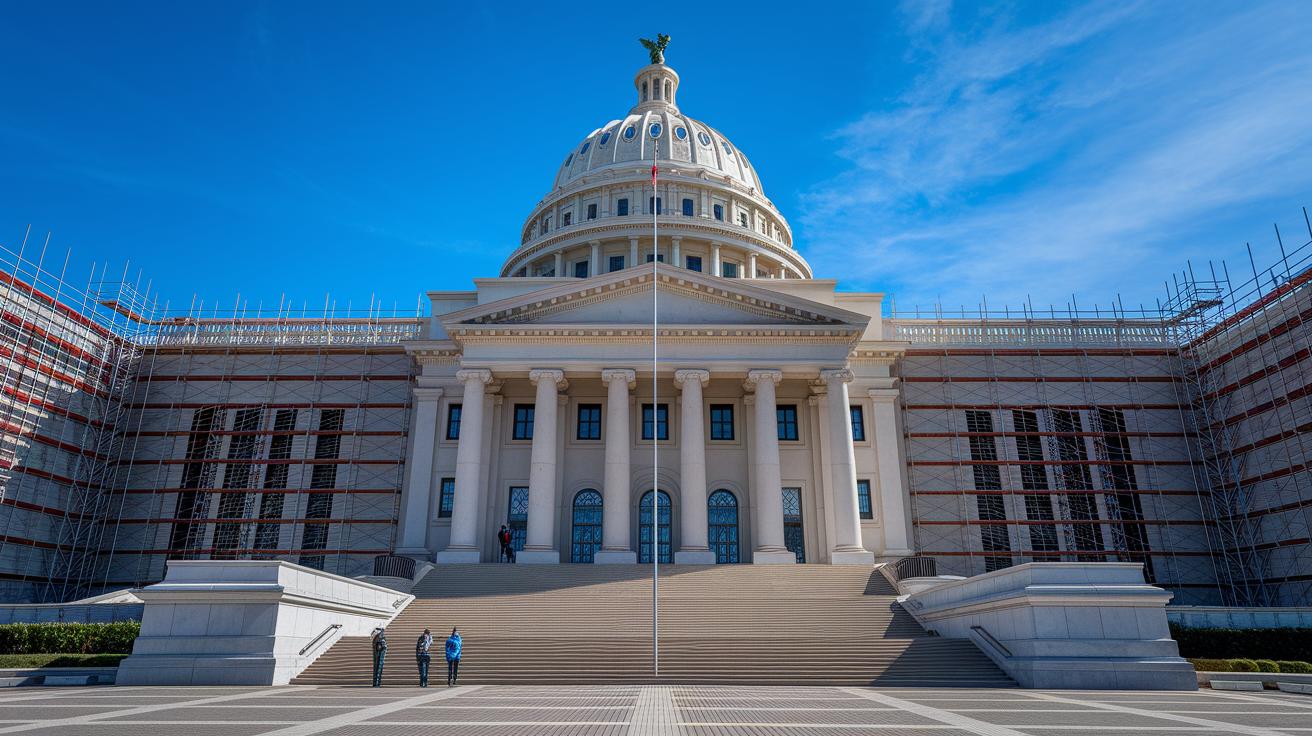
Fiscal policy is all about how governments use spending and taxes to steer the nation’s economy. In simple terms, it’s a way for governments to give the economy a little nudge when things are slow or to cool things off if they’re getting too heated.
When the government pours money into infrastructure, public services, health, or education, it can spark demand right away. On the other hand, tweaking tax rates changes how much money people and businesses have to spend, but this usually happens more gradually as everyone adjusts to the new rules. This balancing act is meant to help the economy grow steadily while keeping public finances in check.
Consider these key parts of fiscal policy:
| What It Does | How It Helps |
|---|---|
| Direct government spending | Boosts demand by investing in vital projects and services |
| Tax adjustments | Influences how much money households and companies have to spend |
| Transfers and subsidies | Supports spending for both families and businesses |
| Budget balance shifts | Affects overall economic stability |
It’s interesting to note that while savvy market players might predict some of these fiscal moves, the real impact on economic growth usually unfolds over a longer period. In contrast, changes in monetary policy, like adjusting interest rates by central banks, often have quicker effects on markets and loans. That’s why it’s so important for fiscal and monetary policies to work together in keeping the economy on a steady track.
Government Expenditure Effects on Economic Growth

Government spending covers a wide range of actions, from buying goods and services to investing in major infrastructure projects, as well as providing transfers and subsidies that help people and businesses. These activities lay the foundation for both immediate economic stability and long-term growth.
In the short term, government spending, especially direct purchases and transfer payments, can give a quick boost to demand. When people receive more money, they tend to spend it, much like a family deciding to upgrade its appliances when unexpected cash comes in. At the same time, when the government buys goods and services, local businesses feel the positive impact, helping to stabilize the economy during tougher times.
Looking at the long haul, investments in infrastructure are crucial for unlocking future potential. Projects like new roads, bridges, and modern facilities do more than create jobs right away; they also build a stronger base for productivity. Think of it like setting up the perfect stage, better transport links can lower business costs and improve connections between regions, paving the way for a healthier economy.
It all comes down to making spending decisions wisely. By planning carefully and picking the right projects, governments can ensure that every dollar has a strong impact, balancing today’s needs with tomorrow’s growth.
Tax Reform Contributions to Growth Dynamics

Tax policies work like adjustable settings that change rates and brackets. This helps families keep more of their income and gives businesses a boost with extra cash for future projects. These tweaks not only put extra money in your pocket right away but also encourage companies to invest in long-term growth.
When the government cuts taxes, households suddenly find they have extra funds for daily needs. Meanwhile, lower rates and temporary relief measures inspire companies to reinvest their profits in new projects, sparking a dynamic environment for entrepreneurial ventures. This approach helps create jobs and drives innovation, making it clear that the tax system is built to support steady economic growth.
On the flip side, updating tax brackets can modernize outdated systems. That helps the government collect taxes more efficiently while still fueling economic activity. Balancing lower tax rates with the need for a consistent revenue stream is no easy task, but these reforms aim to ease the financial burden on both individuals and businesses. Plus, by simplifying the filing process and cutting down compliance costs, updated brackets can boost confidence in a more stable fiscal structure.
Lawmakers also pay careful attention to how benefits are shared. They work hard to ensure that tax reforms support growth across the board while still raising enough funds for essential public services.
Budget Deficit Implications and Public Debt Influence on Growth

Recent U.S. trends show federal deficits climbing, from 4.6% of GDP in FY2019 to 6.4% in FY2024. This jump comes mostly from huge stimulus spending and lower-than-expected revenue. Meanwhile, when you set aside interest payments, the primary deficit only increased a bit, from 2.8% to 3.1% of GDP. It’s a clear sign of how tricky it is to fund government programs while trying to give the economy a boost.
Balancing growth and keeping finances sustainable is a hot topic. On one side, borrowing to pump up demand can help spark economic expansion during slow periods. But on the flip side, piling up debt might limit the government's wiggle room later on. Too much borrowing could even crowd out private investments, meaning fewer funds available for businesses, which could slow overall growth.
This crowding-out effect happens when government borrowing pushes interest rates higher, making it tougher for private companies to secure funding.
To tackle these challenges, policymakers are looking at strategies like cutting back on non-essential spending and consolidating budgets. The goal is to reduce extra borrowing while still investing in projects that drive long-term growth. It’s a tough balance, do we cut spending to lower debt, or do we keep running stimulus programs that support immediate recovery? Experts continue to weigh these options, trying to find a path that supports growth without sacrificing fiscal responsibility.
Multiplier Analysis for Economic Growth: Empirical Fiscal Impact Measures

Imagine trying to measure the straightforward impact of government policies on real GDP. The Hutchins Center Fiscal Impact Measure (FIM) does just that by looking at local, state, and federal actions. Using July 31, 2025 as its reference, FIM applies a multiplier of 1, which means it captures the immediate push from different fiscal actions. It skips interest payments and gives each component a weight based on how much people tend to spend an extra dollar, a simple way to see that every part of the policy mix moves the economy differently.
During rough patches, like the pandemic, spending on government purchases and transfers shot up far beyond what 2019 Q4 patterns might have predicted. This real-world boost pushed actual GDP higher than what a calm economic scenario would suggest.
| Fiscal Component | Actual Value (Billion USD) | Counterfactual Value (Billion USD) |
|---|---|---|
| Transfers | 250 | 200 |
| Taxes | -150 | -170 |
| Purchases | 300 | 280 |
| Net GDP Effect | 400 | 350 |
Looking at this table, you'll notice clear differences between what actually happened and what stable conditions would have predicted. Transfers exceeded expectations, showing how immediate support to households can boost demand right away. Taxes took a hit by lowering disposable income, but they were lower than expected, which helped keep spending steadier. Government purchases gave a modest lift on their own, and together these factors produced a net GDP effect that surpassed the baseline forecast.
This hands-on approach really brings home the idea behind the multiplier effect in macroeconomics. It reminds us that not every dollar spent by the government turns into an equal dollar of economic growth. Instead, each element plays its own unique role, making precise measurement essential to truly understand how fiscal actions impact the economy.
Cross-Country Fiscal Policy Case Studies and Growth Outcomes

We explored a range of countries, from established giants like the U.S. and Germany to emerging markets like India and Brazil, to see how different fiscal strategies work in real life. We picked these cases because they clearly show how each nation's unique setup can change the way fiscal spending impacts its economy.
In places like Germany, policymakers opted for direct, targeted help. They introduced measures like wage subsidies and business loans to keep money flowing and employment stable. These steps helped many companies ride out economic stress and kept market confidence steady.
Meanwhile, emerging markets chose strategies that fit their own needs. India focused on pumping money into infrastructure projects to boost long-term production capacity. Brazil, on the other hand, provided direct cash transfers to households to keep spending up. Both approaches aimed to tackle immediate challenges while setting the stage for future growth.
It’s interesting to note the role of global connections, too. Countries that are tightly linked through trade can see a ripple effect from one nation's fiscal policies. A well-chosen intervention in one market might influence economic trends in others, showing just how interconnected our world really is.
These case studies remind us that when fiscal policies are thoughtfully designed with local conditions and international ties in mind, they can help soften economic downturns and support steady growth.
Policy Mix: Short-Term Stimulus vs Long-Term Growth Impacts

Short-Term Fiscal Stimulus Effects
When governments use fiscal tools, early market reactions start to show up almost immediately. Investors begin noticing small shifts, such as rapid moves in equity futures, which can signal a burst of renewed consumer and business confidence. For instance, a sudden boost in transfer payments might quickly shift equity traders’ strategies. These quick market signals offer a real-time feel for near-term economic mood without getting bogged down in detailed demand mechanics.
Long-Term Structural Impacts
Over time, fiscal policy works on deeper foundations like responsible spending, careful debt management, and improved productivity. These long-term adjustments build steady market confidence. Think of it this way: better debt control often leads to more stable bond yields, suggesting that strategic infrastructure investments can strengthen the economy for years to come.
When fiscal decisions are paired with thoughtful monetary policies, the signals become even clearer. Coordinated moves between spending initiatives and interest rate tweaks help create a consistent market outlook, much like the steady rhythms seen in broader economic cycles.
Final Words
In the action, we explored fiscal policy by assessing government spending, tax reforms, and budget deficits. We highlighted how multiplier analysis and real-world case studies enrich our understanding of economic trends. Each section showed that well-coordinated fiscal decisions can boost growth while managing debt and sustaining stability. The discussion reinforces how the impact of fiscal policy on economic growth remains a fundamental theme, guiding us toward smarter, more resilient financial strategies. It’s a hopeful reminder that careful policy execution paves the way for a stronger economic future.
FAQ
Impact of fiscal policy on economic growth pdf
The impact of fiscal policy on economic growth PDF outlines how government spending and tax decisions can influence economic growth by altering aggregate demand and shaping investment behavior.
Negative impact of fiscal policy on economic growth
The negative impact of fiscal policy on economic growth occurs when increased taxes or drastic spending cuts reduce consumer spending and investment, potentially dampening overall economic activity.
Monetary policy
Monetary policy works by using interest rates and other tools set by central banks to influence borrowing costs and money supply, distinguishing it from fiscal policy, which focuses on government spending and taxes.
Expansionary fiscal policy
Expansionary fiscal policy aims to stimulate growth by increasing government spending or cutting taxes to boost demand, though these measures can also lead to higher budget deficits.
Objectives of fiscal policy
The objectives of fiscal policy include encouraging economic growth, stabilizing economic fluctuations, and managing public debt by adjusting tax rates and government expenditures accordingly.
Contractionary fiscal policy
Contractionary fiscal policy involves reducing government spending or raising taxes to slow an overheating economy, which can help control inflation but may also dampen growth.
Types of fiscal policy
The types of fiscal policy are categorized as expansionary, which boosts economic activity through increased spending or lower taxes, and contractionary, which slows growth by cutting spending or raising taxes.
Fiscal policy examples
Fiscal policy examples include initiatives like tax reductions, increased spending on public projects, and direct transfer payments, all designed to influence overall economic demand and stability.
How does the fiscal policy affect economic growth?
Fiscal policy affects economic growth by altering government spending and tax structures, thereby influencing aggregate demand, encouraging investment, and ultimately shaping the overall economic landscape.
Why do fiscal policies take longer to impact the economy?
Fiscal policies take longer to impact the economy because their implementation requires legislative approval and gradual rollout, making their effects slower to materialize compared to immediate monetary actions.
What are the three main goals of fiscal policy?
The three main goals of fiscal policy are to stimulate economic growth, maintain economic stability, and achieve sustainable public finances through balanced adjustments in taxation and spending.